Somewhere on most discs there’s a set of four numbers. Some discs label what each of those numbers represent. In this post I am going to tell you exactly what each number represents and how it effects the flight of a disc.
What do these numbers look like?

This Westside Disc has each number labeled underneath
This can help people unfamiliar with this disc understand how it flies.

This disc made by Discraft only shows the typical row order of the disc’s numbers
Discraft includes their own fifth number that I’ll get into more later.

Some discs don’t have any numbers on the disc at all
When you’re used to throwing a disc you don’t need to see the numbers anymore, you’ll know how that disc flies.
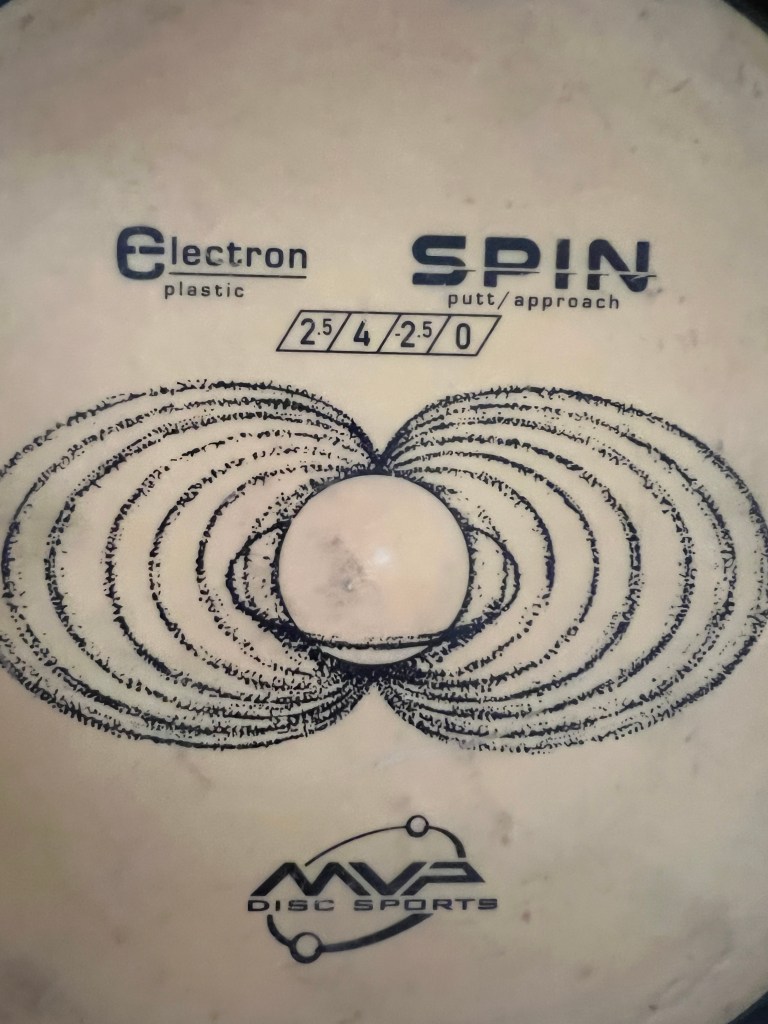
You’ll see some numbers with decimals like -2.5 on this MVP Spin
What do these numbers stand for?
Speed
The first number that appears on your disc represents its speed, or the rate at which the disc can travel. The speed of a disc is ranked 1 to 14. 1 being the slowest and 14 being the fastest. Basically, the higher the first number, the faster that disc will be able to cover a distance and the higher the first number the higher the potential of that disc flying further. Keep in mind, a disc with a high speed number requires more power for it to fly properly.
Glide
The second number that appears on your disc represents its glide, or its ability to stay in the air during its flight. The glide of a disc is ranked 1 to 7. 1 being the least amount of “float” and 7 being the greatest. Basically, the higher the second number, the longer that disc has the potential to stat afloat during its flight. This number should be taken into consideration more when throwing on windier days. The more glide a disc has means less control in windy situations, so on those gusty days keep an eye out for those lower glide discs.
Turn
The third number that you see on your disc represents its turn, or its tendency to fly to the right during the first half of the discs flight, when throwing right hand back hand (RHBH). The turn of a disc is ranked +1 to -5. +1 having the most resistance to turning right (RHBH) and -5 will influence the disc to turn the most. To put it simply, the lower the third number (anything negative is lower than a positive), the more the disc will want to bank to the right initially. Remember, discs with more turn are considered less stable and a disc with less turn is better suited for headwinds.
Fade
Last, but not least, the fourth number you will find on your disc represents its fade, or its tendency to fly to the left (RHBH) at the end of the discs flight. The fade of a disc is ranked 0 to 5. 0 ranking means the disc will fly straight at the end and 5 means it will hook hard to the left at the end. This means the higher that fourth number is, the more dramatic the disc will hook to the left at the end of its flight (RHBH)
Discraft’s Fifth Number
Te fifth number you see on Discraft discs is their own rating on the discs overall stability. Their rating system works fro a -3 to 3. The lower the fifth number on Disccraft’s discs means the more understable a disc will be. The higher that number means the more overstable a disc will be. This fifth rating system is Discraft’s original number system and is just their way of telling the user how stable that disc tends to fly.
 Dude Disc Golf
Leave a comment